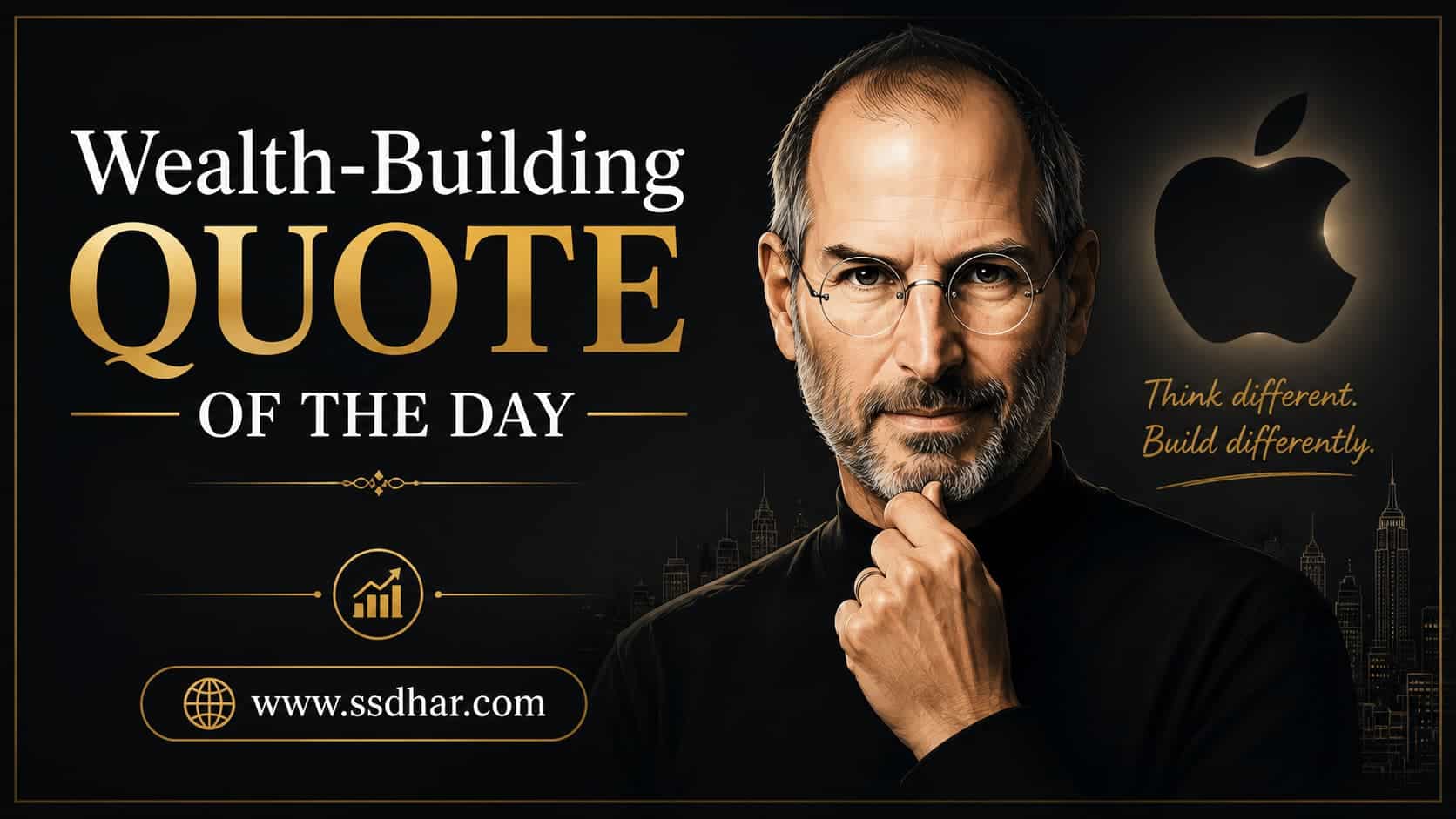
Jobs said this to The Wall Street Journal in 1993, at a point in his career that had nothing to do with the polished, world-conquering image most people associate with him today. He was in the middle of running NeXT, a company struggling with failed hardware and a string of departures. He wasn’t yet the man who would bring back Apple with the iMac, iPod, and iPhone. He was, by most outside measures, in a rough patch. And it’s precisely because of that timing that the quote carries more weight than a line delivered from the comfort of success.
The Quote
“Being the richest man in the cemetery doesn’t matter to me. Going to bed at night saying we’ve done something wonderful, that’s what matters to me.” — Steve Jobs
What the Quote Actually Means
On the surface, this looks like a quote about not caring for money. Read that way, it seems oddly out of place on a list of wealth-building wisdom. But look closer, and the message is almost the opposite of “money doesn’t matter.” Jobs isn’t dismissing wealth. He’s redefining what actually produces it in a sustainable, lasting way.
He’s making the case that wealth built purely for the sake of accumulation runs out of fuel. What keeps a person working, building, and creating through failure, criticism, and long stretches without reward is a sense that the work itself matters. Money, in this framing, becomes a byproduct of good work done consistently, not the goal that work is chasing.
This distinction matters more than it seems. People who chase money directly tend to burn out or make short-term decisions that undermine long-term growth. People who chase mastery, usefulness, or genuine value creation tend to build something that keeps generating wealth long after the initial motivation would have faded.
Why This Matters From Different Angles
For the entrepreneur: Startups fail constantly, and the ones that survive their hardest years are rarely run by founders motivated purely by a future payday. The founders who make it through the low points are usually the ones who care about the product or mission enough to keep going when the financial upside looks uncertain.
For the employee building a career: This quote applies just as much to someone climbing a corporate ladder as it does to a founder. Chasing a title or a salary number as the sole goal tends to produce burnout. Chasing genuine competence and pride in the work tends to produce both career growth and financial reward, almost as a side effect.
For the investor: There’s a quieter lesson here too. The companies and people worth investing in, whether that’s your own business or someone else’s, are usually the ones building for a purpose beyond the balance sheet. Purpose-driven work tends to survive market downturns better than work built purely around extraction.
Is This an Evergreen Quote or a Time-Bound One?
This one is evergreen, and interestingly, it wasn’t even original to Jobs. Quote historians have traced a nearly identical sentiment back to the 1930s, when comedian Ed Wynn told reporters he had no interest in being the “wealthiest man in the cemetery.” Business figures across multiple decades, including Colonel Harland Sanders of KFC, echoed similar lines. Jobs simply gave the idea its most modern, widely repeated form.
That lineage actually strengthens the point. An idea that has been independently rediscovered by comedians, entrepreneurs, and business icons across nearly a century isn’t a passing trend. It’s a recurring truth about how humans sustain effort over time.
A Note for Readers
If you’re building anything right now, whether that’s a business, an investment portfolio, or simply your own financial habits, it’s worth asking honestly what’s driving the effort. If the answer is purely “to have more money,” it’s worth sitting with that for a moment, because motivation built on a number alone tends to run dry the moment progress stalls.
The version of wealth-building that lasts tends to come from people who found something worth doing well, and let the financial rewards follow from that. Jobs wasn’t offering a rejection of wealth. He was offering a more durable way to build it.