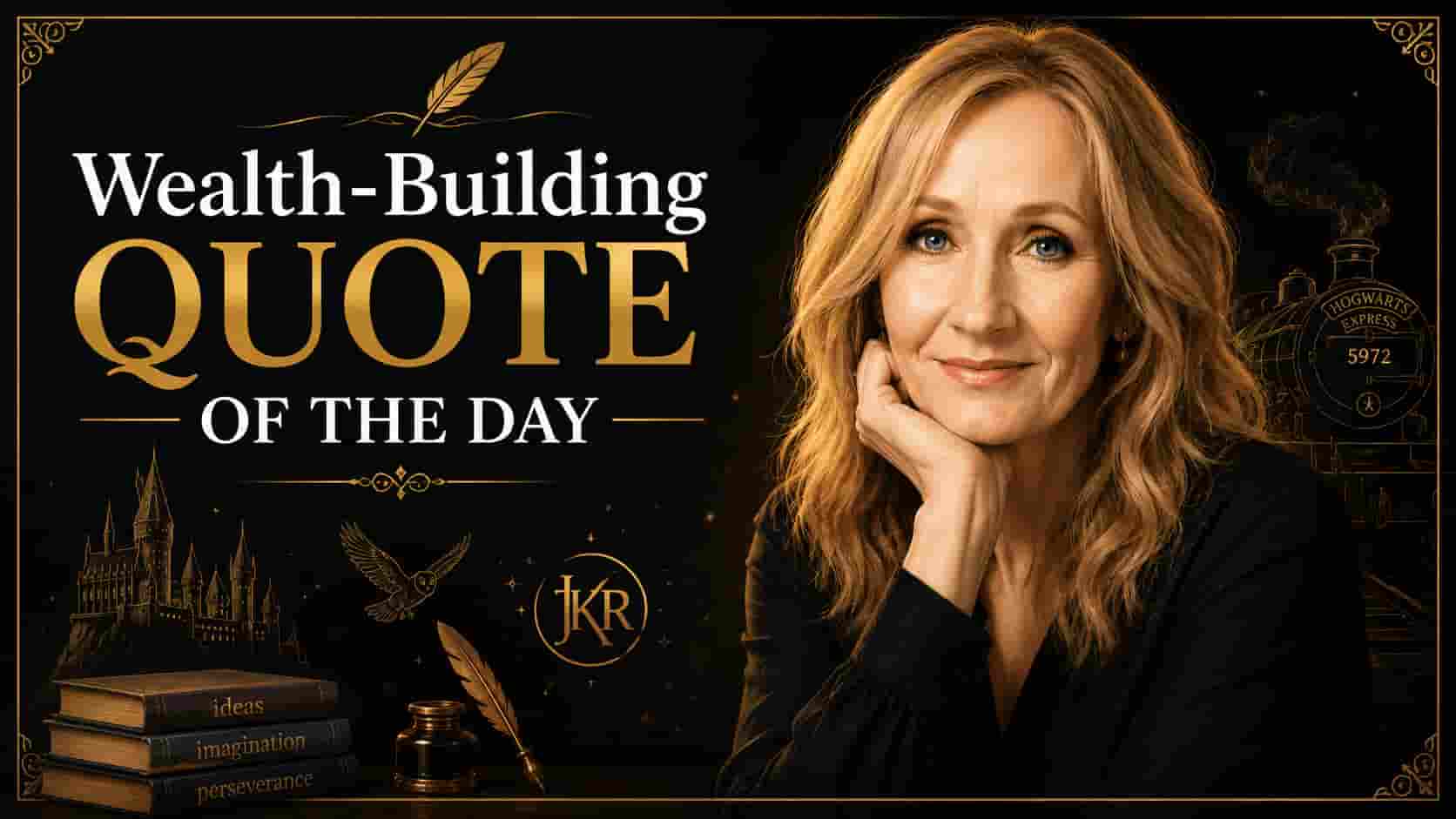
This line comes from one of the most widely watched commencement speeches ever delivered, “The Fringe Benefits of Failure and the Importance of Imagination.” Rowling stood in front of Harvard’s graduating class and told them, plainly, that seven years after her own graduation she had failed on what she called an epic scale. A short marriage had ended, she was jobless, a single parent, and by her own description as poor as it was possible to be in modern Britain without being homeless. She wasn’t speaking in metaphors. She had genuinely touched bottom, and this quote describes what she did once she was there.
The Quote
“And so rock bottom became the solid foundation on which I rebuilt my life.” — J.K. Rowling, Harvard Commencement Address, June 5, 2008
What the Quote Actually Means
There’s a version of this idea that gets repeated so often it loses its teeth: “failure is a stepping stone to success.” Rowling’s version is sharper than that. She isn’t saying failure is secretly good, or that struggle should be romanticized. She’s describing something more specific: once she had nothing left to protect, she stopped performing a version of life that wasn’t working, and started building on the one thing she actually had, which was the ability to write.
The word “foundation” is doing real work here. A foundation isn’t decoration. It’s the part of a structure nobody sees, the part that determines whether everything built afterward can hold weight. Rowling’s point is that having genuinely nothing left to lose stripped away every distraction and every safer, less honest option she might otherwise have chosen. What remained was the one pursuit she actually believed in.
Why This Matters From Different Angles
For anyone recovering from financial setback: This quote speaks directly to people who’ve lost a job, a business, or a stable income and feel like they’re starting from less than zero. Rowling‘s point is that rock bottom, while genuinely painful, also removes the fear of losing status you no longer have. That fear is often what keeps people from taking the one risk that could actually change their situation.
For entrepreneurs and career-switchers: Most people who eventually build something meaningful, whether that’s a business, an investment strategy, or a new career, do so only after ruling out every “safer” option first. Rowling had tried the more conventional path before turning fully to writing. The failure wasn’t the beginning of her story. It was what forced her to stop hedging.
For anyone currently in a difficult financial period: This quote isn’t permission to stay stuck. It’s a reframe. The discomfort of having lost financial security can either paralyze someone or clarify exactly what they actually value and are willing to work for. Rowling’s story only works because she used that clarity to act, consistently over years, before any of it paid off.
Is This Quote Evergreen or Time-Bound?
This quote is evergreen, and its timing has proven that twice over. Rowling delivered it in June 2008, just months before the global financial crisis hit its worst point. Audiences who first watched the speech online in late 2008 and 2009 were often facing job losses and financial uncertainty themselves, which is part of why the speech spread so widely at the time. It resurfaces again during every downturn, every layoff wave, and every personal financial crisis someone happens to be living through, because the core idea, that loss can clarify rather than only destroy, doesn’t depend on any particular economy or era.
A Note for Readers
If you’re in a period where things feel like they’ve fallen apart financially, it’s worth asking a version of Rowling’s question: with the fear of losing what you already lost removed, what would you actually choose to build? That question is uncomfortable, but it’s also the most honest starting point most people ever get.
One more thing worth remembering: Rowling wrote the first Harry Potter manuscript during this exact period, with no guarantee it would ever sell. The wealth that followed wasn’t the plan. It was the result of choosing, at her lowest point, to fully commit to the one thing she actually believed she could do well. That order matters. The commitment came first. The wealth came after.