I didn’t write this book because I had all the answers about money. I wrote it because, for a long time, I didn’t — and I watched the people around me struggle with the same invisible patterns I was trying to understand in myself. What I kept noticing wasn’t a shortage of income. It was a shortage of awareness. People weren’t broke because they earned too little. They were stuck because they’d never been shown how deeply psychology runs through every financial decision they make. That realization became this book. And if even one chapter changes the way you see your own wallet, this was worth writing. – S S Dhar
In this article
The Story of Luddy John
Let me tell you about someone you might already know — maybe not by name, but definitely by situation.
Luddy John earns $5,000 every month. That’s a solid income for most people in most places. He’s not extravagant by his own definition — he doesn’t throw money away on yachts or designer suits. He just lives. He eats out when he’s tired. He upgrades his phone when a new model drops. He buys things on sale because they’re “a great deal.” He treats himself on weekends because the week was hard. He subscribes to things he forgets about. He shops when he’s stressed, when he’s happy, when he’s bored. Not recklessly — just consistently.
Here’s what makes Luddy’s story worth telling.
Some of his closest friends — people who once earned less than him, people who shared tight apartments and stretched grocery budgets — have quietly built multiple small businesses over the past few years. They didn’t start with more. They started with less. But today, those same friends are clearing $20,000 a month and still climbing. They talk about reinvesting. They talk about margins. They talk about the next thing they’re building.
Luddy listens. He nods. He tells himself he’ll start something soon.
He doesn’t.
And the gap between Luddy and his friends has nothing to do with luck, talent, connections, or starting capital. The gap is entirely psychological. His friends didn’t earn their way to wealth — they thought their way there first. They understood, either instinctively or through hard experience, that money is a tool. Luddy has always treated it as something that comes and then goes, and that’s just how life works.
Every $5,000 Luddy earns gets completely absorbed — by habit, by emotion, by the quiet, constant pull of spending that feels normal until the month ends, and there’s nothing left to show for it. No emergency fund. No investment. No foundation. Just the memory of things that felt good to buy.
Luddy isn’t a bad person. He isn’t lazy or reckless. He’s simply never understood the psychology behind why he spends the way he does. And that one blind spot has cost him — not dramatically, not all at once, but slowly, month after month, year after year.
This book — and this blog — is for every Luddy out there.
Have you ever walked out of a store with something you never planned to buy? Or stared at your bank statement, wondering where the month went? You’re not alone — and more importantly, you’re not irresponsible. Most of the time, overspending isn’t about being careless with money. It’s about being deeply, unavoidably human.
The psychology of spending is the invisible force that steers your financial decisions every single day — often long before you ever reach for your wallet. It sits at the crossroads of emotion, identity, social pressure, and habit. And until you understand it, you’ll keep finding yourself in the same financial loops, wondering why things never quite change.
This post breaks it all down honestly: why your money habits are what they are, what emotional triggers pull you toward impulse buying, how social influence quietly shapes your spending behavior, and what you can actually do — starting right now — to take real control. This isn’t a lecture. Think of it as a conversation about something that touches every single part of your life.
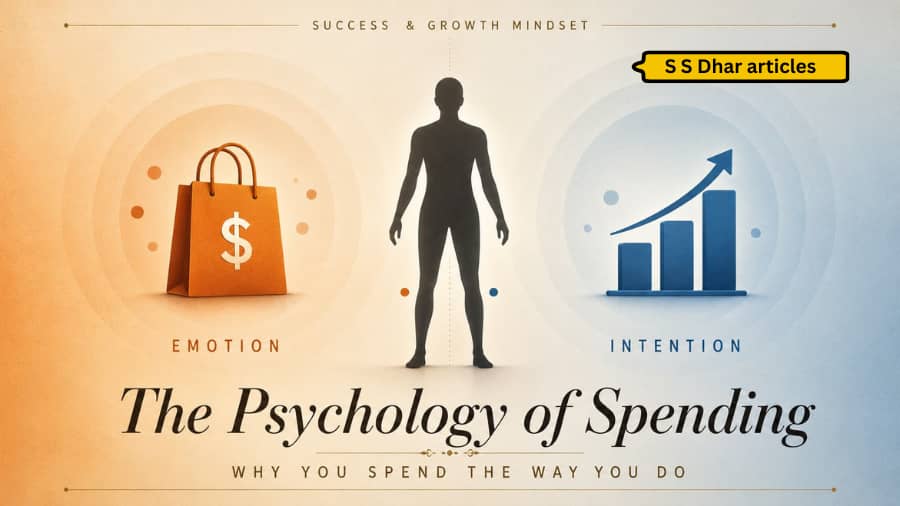
Your Spending Is Emotional Before It’s Financial
Here’s something most financial advice misses entirely: every purchase you make carries psychological weight before it carries a price tag.
When you buy a new outfit after a rough week, you’re not just buying clothes — you’re reaching for a temporary mood lift. When you swipe your card on a “today only” deal, you’re not making a logical decision — you’re reacting to a fear. When you order takeout for the fifth time this week, you might be avoiding stress, not feeding hunger.
The psychology of spending reveals that our brains are wired to seek pleasure and avoid discomfort. That’s a useful survival tool, but in a marketplace designed to exploit it, the same wiring becomes a liability. Every time you make a purchase, your brain releases dopamine — the feel-good chemical — creating a brief high that it quickly learns to chase again. This is the engine behind emotional spending, and it runs quietly in the background of nearly every financial decision you make.
The cycle is predictable: you feel stressed or bored, you shop, you feel better for a moment, the feeling fades, and the loop restarts. Most people don’t recognize this pattern for years. But once you do, you can begin to interrupt it.
Your Childhood Wrote Your First Money Script
Your money habits didn’t start when you got your first paycheck. They started much earlier — probably before you were old enough to understand what money even was.
Children raised in financially anxious households often develop what’s called a scarcity mindset: a deep-rooted belief that money is always at risk of running out. As adults, this can show up in surprising ways — sometimes as extreme frugality, sometimes as impulsive spending (“there will never be enough anyway, so why hold back?”). On the other hand, children raised in financially comfortable environments may grow up assuming money is always available, leading to a habit of spending without much thought.
The point isn’t to assign blame — it’s to recognize that your current spending behavior was largely conditioned into you, not consciously chosen by you. And what’s conditioned can absolutely be reconditioned.
Your early experiences with money, the way your parents talked about it (or didn’t), the emotional associations you formed around wealth and lack — all of it laid the groundwork for the money habits you’re carrying today. Recognizing that is one of the most underrated first steps anyone can take toward financial change.
Social Media, FOMO, and the Real Cost of Comparison
Scroll through Instagram for ten minutes. You’ll see someone on a trip you didn’t take, someone in a car you can’t afford, someone living what looks like a life you should want. Now ask yourself honestly — how does that actually make you feel?
If you’ve ever made a purchase right after spending time on social media, you’ve already experienced what researchers increasingly call the “Insta-Effect.” Social comparison — measuring your life against the curated highlight reels of others — activates the Fear Of Missing Out, better known as FOMO. And FOMO is one of the most powerful psychological triggers in modern spending behavior.
Marketers didn’t stumble onto this by accident. Flash sales with countdown timers, “limited stock” warnings, and influencer endorsements are all engineered to exploit urgency and social proof. When a product is promoted by someone you trust and framed as nearly gone, your rational thinking tends to step aside. The psychology of spending gets weaponized — and most of us don’t even notice it happening.
What helps? Reminding yourself that other people’s highlight reels are not your financial benchmark. The people whose lifestyles you’re tempted to match are often managing their own debt, their own anxieties, and their own cycles of emotional spending.
The Instant Gratification Trap Is Real — and It’s Expensive
Human beings are biologically wired to prefer rewards now over rewards later. This isn’t a character flaw — it’s evolution. Our ancestors needed to act fast to survive. But in today’s world, that same instinct causes us to click “buy now” instead of saving, to upgrade when our current phone works fine, and to let present comfort cost our future security.
Instant gratification in spending means choosing the impulsive dinner out tonight over the emergency fund you’ve been putting off for two years. It means adding things to your cart because checkout is frictionless. It means letting the version of you that’s bored or stressed make decisions for the version of you that has real goals.
The good news: delayed gratification is a learnable skill. Research consistently shows that people who pause before acting impulsively build significantly stronger financial foundations over time. One practical rule — waiting 24 hours before making any non-essential purchase — can dramatically cut down on impulse buying. That one habit alone, when practiced consistently, can shift your money habits in ways that feel almost structural.
The Financial Traps Most People Fall Into Without Realizing It
Understanding the psychology of spending also means being able to name the traps before you’re already inside one. Here are the most common:
The Debt Trap: Easy credit makes overspending feel consequence-free — until it isn’t. Interest compounds silently, and what started as a manageable balance can snowball into something that takes years to climb out of. Many people only realize the weight of debt when it becomes impossible to ignore.
The Lifestyle Inflation Trap: Every time your income goes up, do your expenses go up with it? That’s lifestyle inflation. More income should create more savings and more financial flexibility — not just a more expensive version of the same habits. This trap is particularly insidious because it disguises itself as success.
The Emotional Spending Trap: Using retail therapy to manage stress, boredom, or sadness is understandable. It just doesn’t work. The purchase brings temporary relief; the emotion returns. The bill stays. And over time, this pattern quietly erodes any financial progress you’ve made.
The FOMO Trap: Buying things because others are buying them, or because a deal feels too urgent to pass up, rarely produces genuine satisfaction. The rush fades within hours. The expense is forever logged in your account.
The “Too Good to Be True” Trap: Get-rich-quick schemes, high-risk investments that promise huge returns with minimal effort, unverified business opportunities — these prey on the desire for financial shortcuts. They almost always make things worse. Proven, boring strategies — consistent saving, index funds, debt reduction — aren’t exciting, but they work.
Avoiding these financial traps doesn’t require perfection. It requires awareness. And awareness begins the moment you start asking, “Why am I buying this?” before you buy it.
Practical Steps to Build Healthier Money Habits
Building better money habits isn’t purely a willpower game. It’s about creating systems that make the right choice easier than the wrong one.
Track your spending for 30 days. Not to judge yourself — just to see where your money actually goes. The patterns that surface tend to surprise people. You can’t change what you can’t see.
Pay yourself first. Set up an automatic transfer to savings on payday — before any other spending happens. When saving occurs before spending, it actually occurs. This single behavioral shift is one of the most impactful changes most people can make.
Use the 50/30/20 framework. Allocate 50% of your income to needs, 30% to wants, and 20% to savings and debt repayment. It’s simple — but it works. Most people who feel like they “can’t afford to save” are really missing a structure, not a higher income.
Practice mindful spending. Before any non-essential purchase, pause and genuinely ask: Does this align with where I want to be in a year? Or is this just filling a moment of boredom, stress, or social comparison? That one question, asked consistently, changes the texture of your financial life over time.
Limit your exposure to marketing triggers. Unsubscribe from promotional emails. Turn off push notifications from shopping apps. Mute accounts on social media that consistently make you feel like you’re lacking something. The fewer artificial triggers you face, the fewer impulse battles you have to fight.
Financial freedom isn’t about earning more money. It’s about developing the awareness and intention to spend in ways that serve your future self — not just your present mood.
Read more
- Money Manifestation Journal: A 90-Day Wealth Mindset Workbook for Real Financial Clarity
- Futuristic Business Models That Can Be Handled by AI and Superintelligence
- Most Impactful Quotes for AI in Business and Income by Tech Giants
- What Is Personal Superintelligence and How Can It Help Your Business?
- How to Use AI to Grow Your Business and Income
People also ask
What exactly is the psychology of spending, and why should I care about it?
The psychology of spending is the study of why we make the financial decisions we do — covering the emotions, social pressures, cognitive biases, and deep-rooted patterns that drive our purchases. It matters because most overspending isn’t rational. People don’t overspend because they’re stupid or careless — they do it because powerful psychological forces push them in that direction without them realizing it. Once you understand those forces, you can start making decisions that reflect your actual goals rather than your momentary state.
What causes emotional spending, and how do I know if I do it?
Emotional spending is typically triggered by stress, boredom, loneliness, anxiety, or even intense happiness. When we’re in an emotionally charged state, our brains look for fast relief — and buying something delivers a temporary dopamine hit. Signs you might be an emotional spender: you shop when stressed, you feel a buzz during the purchase followed by guilt shortly after, you have items at home with tags still on them, or you struggle to remember why you bought something. The key isn’t to stop feeling — it’s to recognize when feelings are driving financial decisions.
How does social media influence my money habits?
Social media creates an environment of constant social comparison. Seeing curated images of vacations, luxury items, and seemingly perfect lives triggers FOMO — the fear of missing out — which pushes us toward purchases that have nothing to do with our real needs or values. Research increasingly links heavy social media use with higher rates of impulse buying and financial dissatisfaction. The fix isn’t necessarily to delete your accounts — it’s to become conscious of the emotional effect they have on your spending impulses.
Which financial traps are most dangerous for everyday people?
The most damaging financial traps tend to be the quiet ones: lifestyle inflation (spending more every time you earn more), the debt cycle (using credit beyond your means until interest becomes crushing), emotional spending (retail therapy that never actually fixes the emotion), and FOMO-driven purchases (buying to keep up rather than because you genuinely want something). What makes these especially dangerous is that they feel completely normal while you’re inside them.
What’s the single most effective habit for stopping impulse buying?
The 24-hour rule is probably the simplest and most effective starting point: when you feel the urge to make a non-essential purchase, wait a full day before buying it. Most of the time, the desire fades significantly. Beyond that, combining the 24-hour rule with tracking your spending and having a clear savings goal creates a system where impulse buying has much less room to operate. You’re not relying on willpower in the moment — you’re making intentional choices harder to bypass through habit and structure.
Final Conclusion
Your spending tells a story about you. And that story has been shaped by things most of us have never consciously examined — childhood experiences with money, cultural expectations, emotional triggers, and a marketing industry specifically designed to bypass your self-control.
The psychology of spending isn’t an abstract theory. It’s something every one of us lives every single day — at the grocery store, on Amazon at midnight, on social media, and at the coffee counter. Understanding it is what transforms reactive money habits into intentional ones. And intentional money habits are what separate financial stress from financial freedom.
You don’t have to be perfect. You don’t need to earn more. You need to understand why you spend — and then use that understanding to make decisions that actually serve you.
That’s the work. And it starts the moment you decide to pay attention.
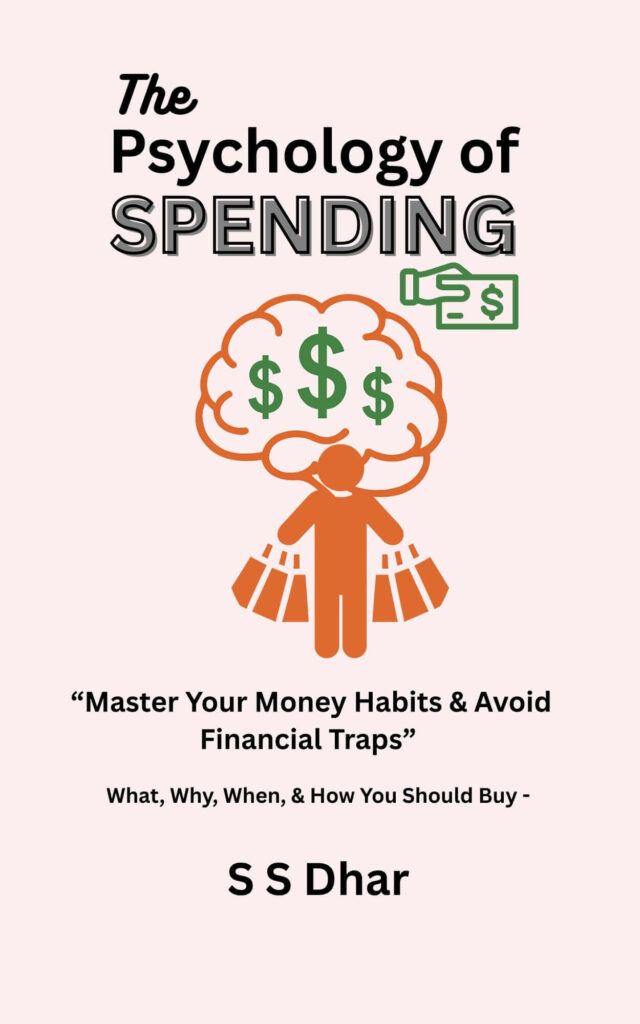
Want to go deeper on this? The full framework behind this post — including the science of why you buy, how to identify your personal financial traps, and a step-by-step path to lasting financial change — is laid out in The Psychology of Spending: Master Your Money Habits and Avoid Financial Traps by S S Dhar, available now on Amazon KDP.

Links to Amazon: US USA | GB UK | AU Australia | CA Canada | IN India | Goodreads