Most advice about self-love stops too soon. It tells us to be kind to ourselves, to speak gently, and to accept who we are. All of that is good. But it rarely asks us to look at what we would rather not see.
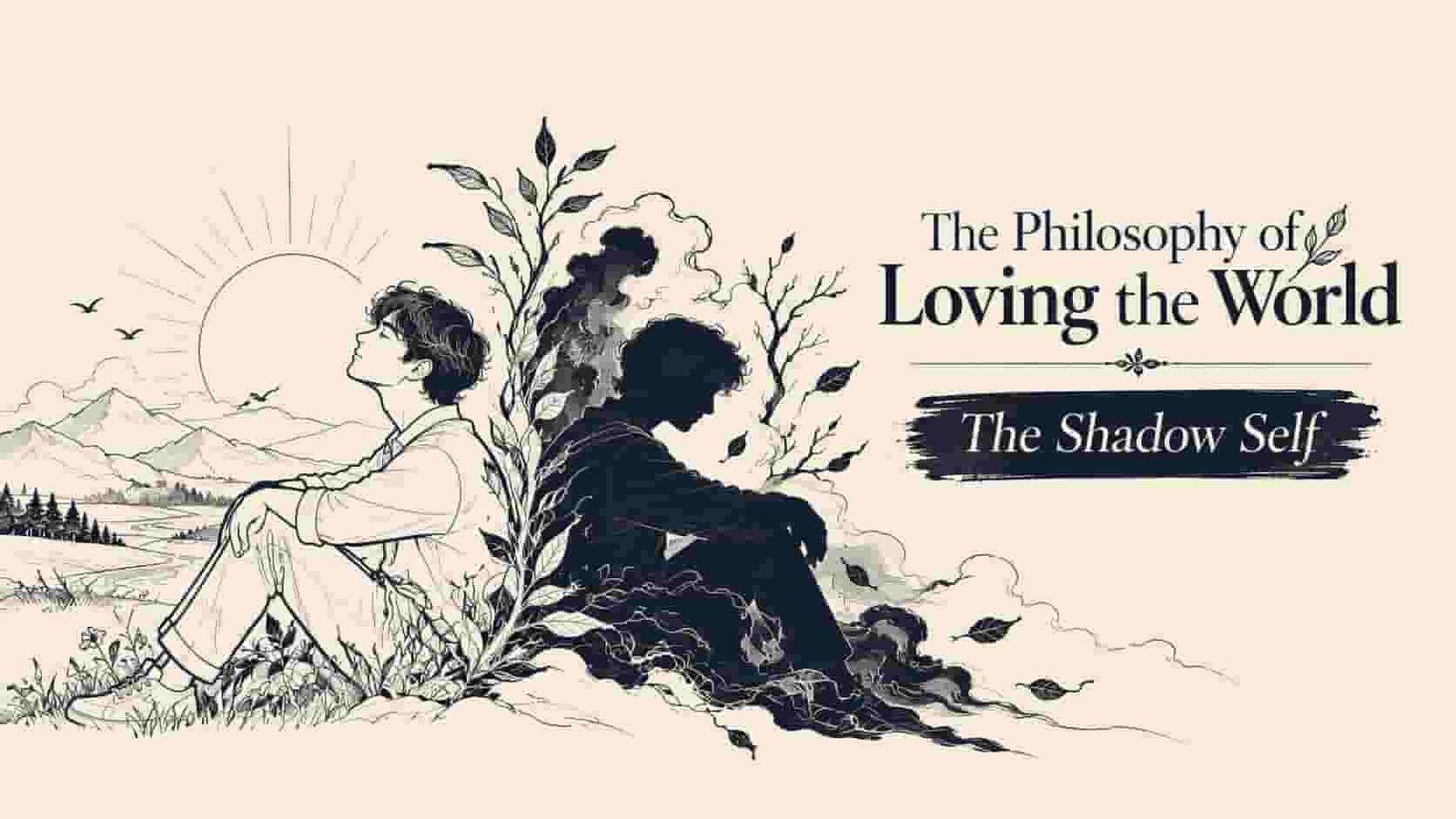
In my book The Philosophy of Loving the World, the second chapter is called “The Shadow Self.” I placed it directly after the chapter on self-love, and before the chapter on loving others. That order is deliberate. I believe love becomes honest only when it has met the shadow.
In this article
Image and shadow
The chapter opens with a short statement of the idea. The consciousness we live by is the image of the self. The subconscious that regulates the image is its shadow. The shadow may be dark or bright. Image and shadow are the two poles of one self.
The idea of a hidden side of the personality is familiar from psychology, and I do not claim to have invented it. What I wanted to add is a poet’s emphasis on two points.
The first is that the shadow is not only dark. It can be bright. It can hold gifts we have never used, such as courage, tenderness, or talent, as easily as it holds fears and faults.
The second is that the image and the shadow are one self, not two. We do not defeat the shadow by cutting it off. We live with it better when we know it is ours.
The song you hum when the house is empty
The first poem in the chapter, “The Unsung Part,” asks questions most of us avoid. What song do you hum only when the house is empty? What conversation do you keep having in the dark of your mind, the one that shapes the shadow you cast? What symphony is rehearsing, far beyond today, in the lives you have not yet claimed?
I chose those questions because the shadow rarely announces itself. It shows up in small, private habits: the thought we repeat at night, the song we sing only when no one is listening, the version of ourselves we have not dared to try. The poem ends with a warning that the notes we never sing can still change the song.
What we hold onto
Further into the chapter, the poems turn to identity and what we cling to. In “The Carved Name,” a person carves their own name into their mind and holds it tightly, remembering the joys, the wins, the griefs, and the bloodshed to keep the heart beating at the edge of living. We guard that name because of everything it cost us.
But a name can also become a mask. In “Behind the Applause,” I wrote that behind millions of claps and smiles lie not only a thousand pebbles on the way, but also the unseen impediments of the mind. Success shows the image. It does not show what lies beneath.
The reckoning
The hardest poem in the chapter is “The Reckoning.” It describes a person who spent a lifetime praying and preaching in order to feed their own desires, begging for the crowns of career and wealth, and justifying any means. Then comes the evening of life. The pride is quiet and the crowns mean nothing. The same name once used so well is now whispered only in pain.
I do not write this to condemn anyone. I write it because I believe most of us will face a version of this moment, and it is better to meet it early.
The old woman’s blessing
The chapter’s turning point is “The Great Renunciation.” In it, a young man visits an old, wise woman to ask for her blessing. She is near the end of her days, weeping, with the frost of age in her knees. Instead of blessing him, she begs a blessing from him.
He stands aside and wonders what songs she sang in her youth, what she preached when life was loud, and whether all of it was kind. His conclusion is the quiet center of the chapter: perhaps, in the end, everyone longs for a blessing.
The poem then asks which of our notes will stay and which will become ghosts. The kind ones may stay. The cruel ones are ghosts now. And the speaker makes a choice that moves from “me” to “us” to “the whole world”: let me abandon them, let us abandon them, let the whole world abandon them.
The root of the shadow
Near the end of the chapter, there is a short poem called “Fear.” It has only two lines. The father of fear is the fear of death.
I believe much of what we hide is rooted there. We hold onto power, praise, and possessions because they promise to last, and we avoid looking at the shadow because it reminds us that we do not. In an earlier chapter, I wrote that whoever conquers the fear of death wins the form of God within themselves, and the flower of ever-winning joy and self-love blooms in a life free from doubt and terror.
Why this comes before loving others
A person who has never met their shadow tends to find it in other people. We blame, we judge, and we build walls from what we refuse to see in ourselves. The cruelty we condemn in the world often began as a feeling we refused to look at in ourselves.
This is why the chapter comes where it does. Love for others will be shallow if it has not first been honest with itself. A person who has faced their own shadow is gentler with the shadows of strangers.
A small practice for the betterment of the shadow self
You do not need a therapist or a retreat to begin. Once a day, ask yourself one question: what am I carrying that I would not want anyone to see?
Do not try to fix the answer. Name it without cruelty, and notice what it asks of you. Over time, you may find that the shadow is not an enemy but a part of you that was waiting to be heard.
That is where self-love becomes honest, and where love for others becomes possible.
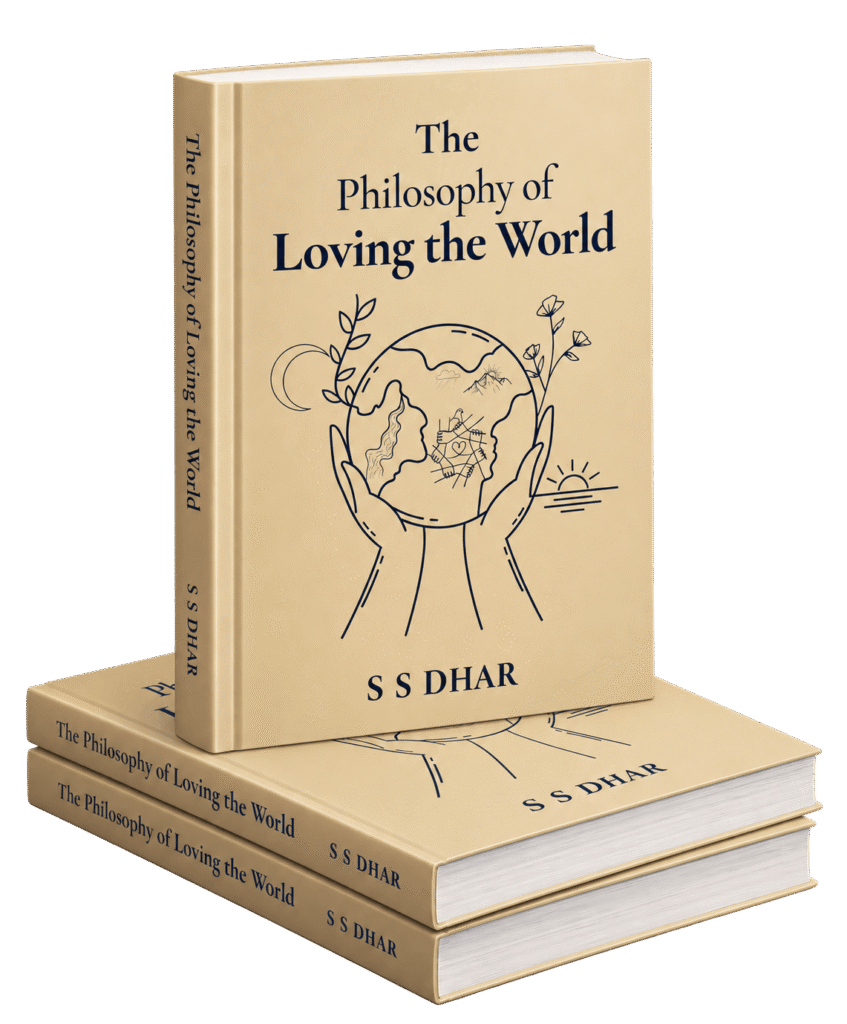
This chapter is part of The Philosophy of Loving the World. Available on Amazon.
Read the manifesto of the coined terms used in this book: The Earthitism Manifesto