I still remember the exact feeling of opening my banking app three days before my next tuition payment was due, praying there was enough left for groceries. Spoiler: there usually wasn’t.
I’m a home tutor. After graduating, I did what a lot of us do — I got busy earning. Between running from one student’s house to another, prepping lesson plans, and just trying to keep my energy up, I was making money. Real money, even. But here’s the part nobody warns you about: earning and building wealth are two completely different games, and for way too long, I was only playing one of them.
Every rupee that came in, went out. Rent, food, a little fun here and there because hey, I deserved it after a long week, right? By the time the next payment cycle rolled around, my account was basically back to zero. No savings. No investments. Nothing set aside for the skills I wanted to learn or the goals I kept telling myself I’d “get to eventually.” I was working hard and staying broke, and honestly, that combo messes with your head more than actual unemployment does. At least when you’re not working, you have an excuse. When you’re grinding every single day and still have nothing to show for it financially, it feels personal.
The turning point wasn’t dramatic. There was no lightning bolt moment. It was just one ordinary night when I sat down, looked at months of my own spending, and realized something uncomfortable: I hadn’t been broke because I didn’t earn enough. I was broke because I never built a system. I was letting my money happen to me instead of deciding what I wanted it to do.
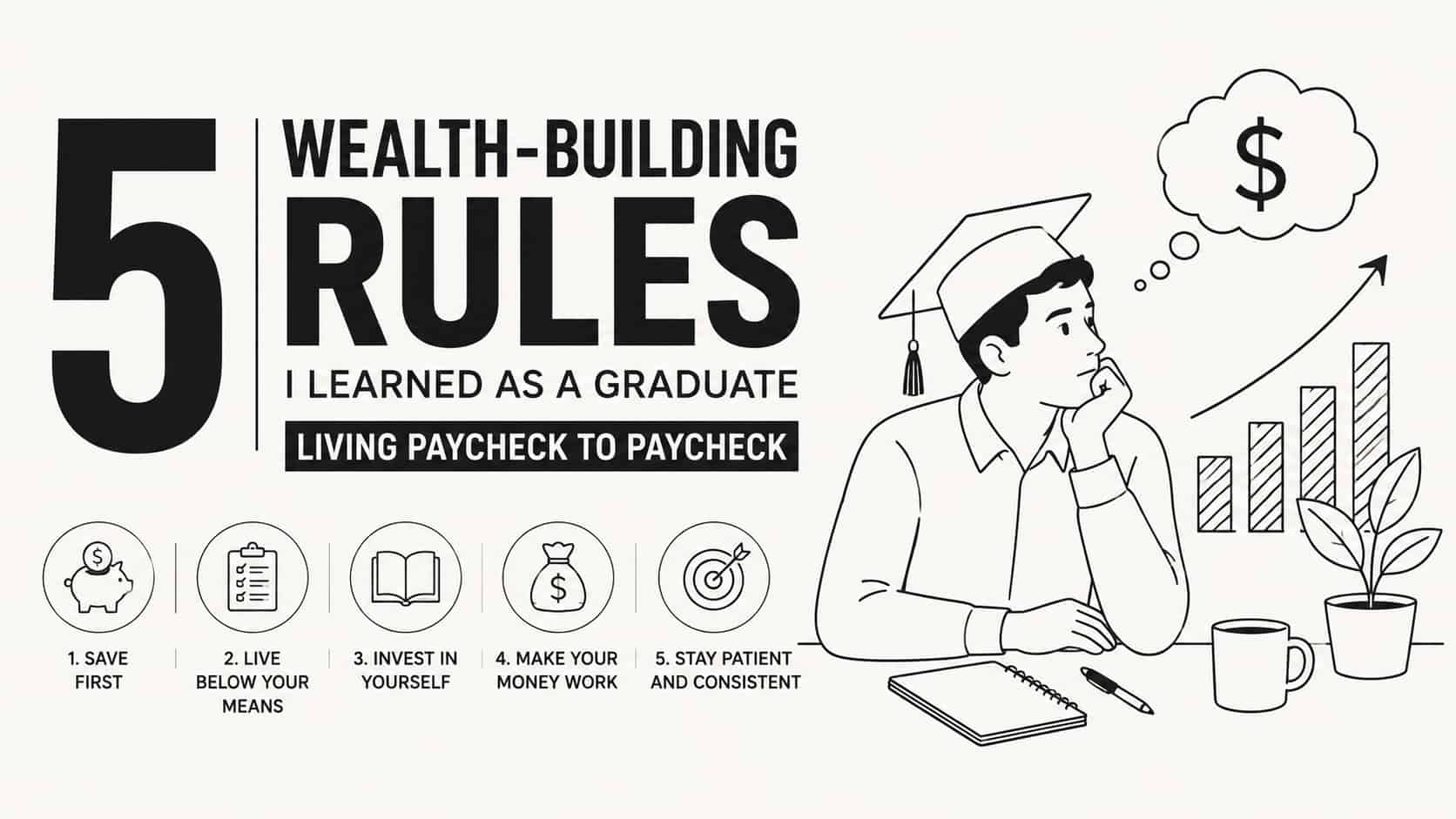
That realization became the seed of everything that changed. So here are the five rules I built for myself, the hard way, that took me from paycheck-to-paycheck panic to actually having a plan.
Rule 1: Pay Yourself Before You Pay Anyone Else
I used to pay rent, pay bills, treat myself, and then “save whatever’s left.” Reader, nothing was ever left. The rule that flipped everything was simple: the moment a payment from a student’s family hits my account, a chunk of it moves out immediately, before I even look at my “spendable” balance. It’s not about how much. In the beginning it was a small amount. But moving it first, instead of last, changed my entire relationship with money. Out of sight really is out of mind, in the best possible way.
Rule 2: Your Skills Are Your Real Investment Portfolio
Nobody handed me stock tips or a trust fund. What I did have was time and a brain that could learn. I started setting aside a small piece of every payment specifically for courses, books, or certifications that made me better at what I do or opened new doors. That’s when I understood something huge: for people starting from zero, your own skillset is the highest-return investment you’ve got access to. Compound interest is great, but compounding your own ability to earn? That’s the real cheat code nobody talks about enough.
Rule 3: Track It or You’re Just Guessing
I thought I “kind of knew” where my money went. I did not. The month I actually wrote down every single expense, down to the chai I grabbed between tuitions, was the month I got genuinely embarrassed. Small leaks were sinking the whole ship. You don’t need a fancy app or a finance degree for this. A notes app and five minutes a day will humble you real quick, in the best way.
Rule 4: You Create It — Nobody’s Sending You a Wealth Invitation
This one’s the big one, and it’s the whole reason I’m writing this post. Wealth was never going to just show up because I worked hard or waited long enough. Nobody was coming to hand me a plan. I had to build my own income streams, my own savings habits, my own boundaries around lifestyle creep. If you’re a fresh grad reading this and quietly hoping some external thing- a raise, a lucky break, a “when I make more money” moment- is going to fix your finances for you: it’s not coming. You create it, brick by brick, decision by decision. That mindset shift alone did more for me than any budgeting app ever could.
Rule 5: Small and Consistent Beats Big and Occasional, Every Time
I used to think wealth-building meant some huge, impressive move, a big investment, a big win. Turns out, it’s boringly simple. It’s the small percentage saved every single time, even when it’s inconvenient. It’s the tiny skill upgrade, repeated. It’s showing up for your own future in unglamorous, unnoticed ways, week after week. Nobody’s clapping for you when you save a small amount instead of buying something you don’t need. But future-you? Future-you is taking notes.
Where I’m At Now
I’m not writing this from some mansion with a view. I’m writing this as someone who went from dreading my banking app to actually checking it with a plan in mind. That shift, from financial anxiety to financial intention, is honestly the real wealth. The money part is still growing. But the mindset part? That’s already paid off.
If you just graduated and you’re staring down your first real paychecks, feeling that mix of excitement and low-key panic, know this: you don’t need to have it all figured out. You just need to start creating it, one rule, one decision, one payday at a time.
How do I start building wealth right after graduation with a small income?
Start with “pay yourself first” — automatically set aside even a small percentage of every payment before you spend anything else. The amount matters less than the habit.
What’s the biggest mistake new graduates make with money?
Spending every rupee as it comes in and assuming savings will happen “whenever there’s extra.” There’s rarely ever extra left over — you have to create the leftover on purpose.
Is investing in skills really better than investing in stocks for beginners?
For someone starting from zero, yes — skill-building often has a faster, more direct payoff since it increases your earning power immediately, while market investing takes both capital and time to compound.
How can I track my spending without using a complicated app?
A simple notes app or a plain spreadsheet works fine. The goal isn’t a fancy system — it’s honestly seeing where every rupee actually goes, including small daily purchases.
What does “you create wealth, no one hands it to you” actually mean in practice?
It means building your own income streams, savings habits, and spending boundaries rather than waiting for a raise, a lucky break, or someone else’s plan to fix your finances for you.