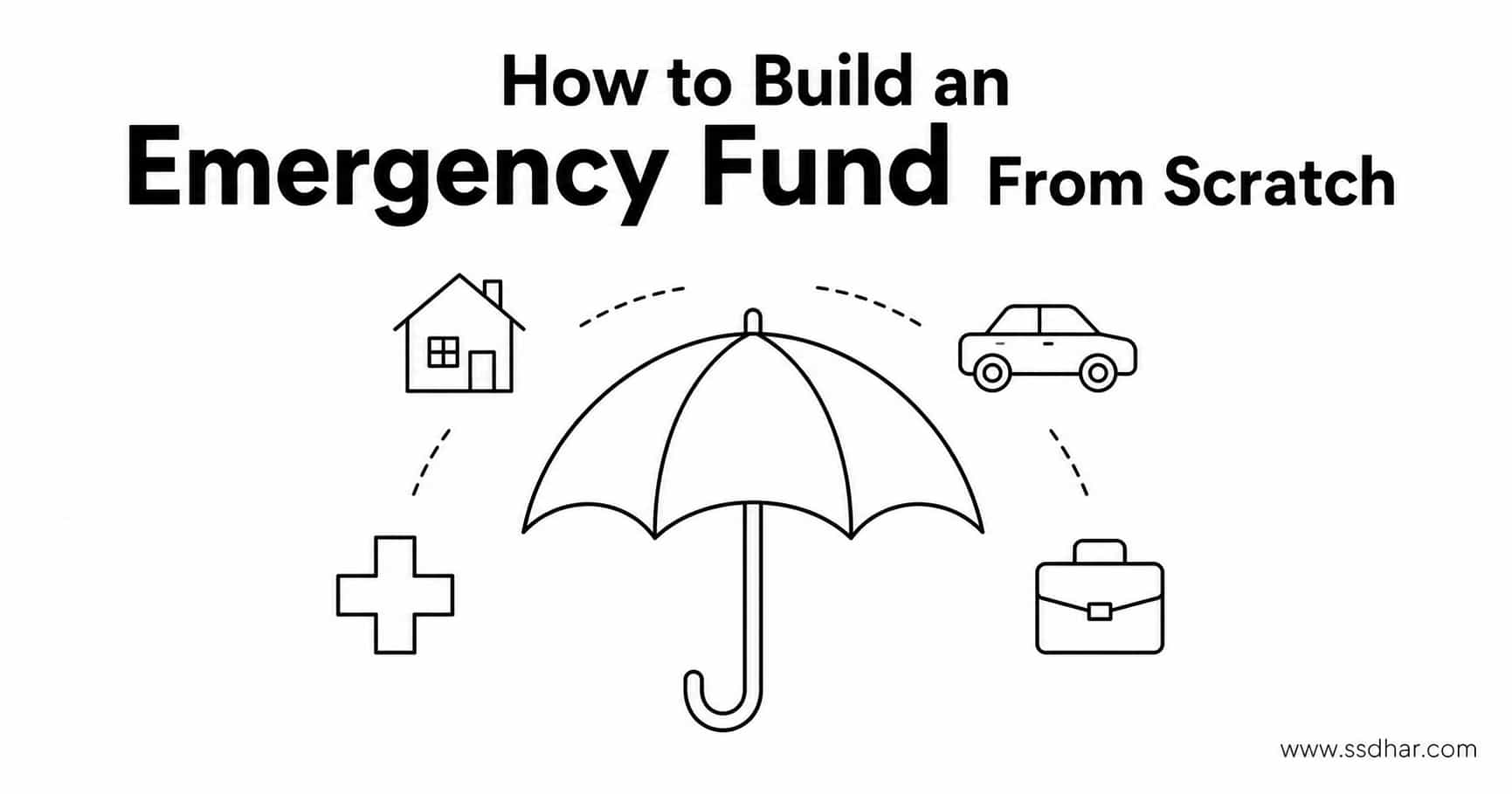
There’s a particular kind of fear that shows up when your car makes a strange noise, or your landlord mentions a rent increase, or your kid needs a dentist visit you didn’t budget for. It’s not panic exactly, it’s that quiet, sinking awareness that you don’t have a cushion to absorb the hit. I’ve felt that exact feeling more than once in my own financial life, long before I ever wrote about money for a living, and it’s a big part of why I take this topic so seriously now, when it comes to building an emergency fund.
In this article
According to the Federal Reserve’s 2024 Survey of Household Economics and Decisionmaking, only 63% of U.S. adults said they could cover a $400 emergency expense using cash or its equivalent. Worse, 30% of adults said they couldn’t cover three months of expenses by any means at all. Those aren’t small numbers. That’s a massive share of otherwise responsible, hardworking people standing one bad week away from a financial spiral. If you want to learn how to build an emergency fund from scratch, even if you’re starting with nothing, this guide walks through exactly how to do it.
What Actually Counts as an Emergency Fund?
Before going further, let’s get clear on what we’re building. An emergency fund is money set aside specifically for genuinely unexpected, necessary expenses: job loss, medical bills, urgent car or home repairs, or a sudden drop in income. It is not your vacation fund, your “I deserve this” shopping money, or your investment account.
The defining feature of a real emergency fund is liquidity. You need to be able to access it quickly, without penalties, without selling stock at a loss, and without waiting weeks for funds to clear. That’s why this money typically lives in a savings account, not the stock market.
How Much Should You Actually Save?
This is where opinions diverge, and it’s worth knowing both sides before you set your target.
The traditional rule of thumb has long been three to six months of essential expenses. Financial expert Suze Orman, however, has pushed her own recommendation higher in recent years, urging people to aim for eight to twelve months of expenses, especially given how unpredictable job markets and economic cycles have become.
| Approach | Target | Best For |
|---|---|---|
| Starter cushion | $500–$1,000 | Anyone starting from zero |
| Traditional rule | 3–6 months of expenses | Stable, dual-income households |
| Orman’s updated rule | 8–12 months of expenses | Single-income or volatile-job households |
Here’s the thing I tell readers constantly: don’t let the size of the final number stop you from starting. Even Warren Buffett, arguably the most successful investor alive, keeps Berkshire Hathaway sitting on a massive cash reserve specifically so the company can weather downturns without panic-selling. If one of the greatest investors in history values having cash on hand, the rest of us shouldn’t feel embarrassed about prioritizing it too.
Step-by-Step: How to Build an Emergency Fund From Scratch
Step 1: Calculate Your Bare-Bones Monthly Expenses
Not your normal monthly spending, your survival number. Rent or mortgage, utilities, groceries, insurance, minimum debt payments, transportation. Strip out everything else. This number becomes your baseline for every later calculation.
Step 2: Open a Separate, Dedicated Savings Account
This step matters more than people expect. Keeping emergency savings mixed in with your checking account practically guarantees you’ll dip into it for non-emergencies. A separate high-yield savings account, ideally one that’s a little annoying to transfer out of quickly, creates healthy friction between you and impulsive withdrawals.
Step 3: Start With a Small, Believable Milestone
Forget the full three-to-six-month target for now. Start with $500, then $1,000. Small wins build the habit, and the habit is what actually gets you to the bigger number eventually.
Step 4: Automate the Transfer
Set up an automatic transfer the same day your paycheck lands, even if it’s just $25. Money you never see is money you’re far less tempted to spend. This single habit does more heavy lifting than almost any other money management trick I’ve come across.
Step 5: Redirect Windfalls Straight Into Savings
Tax refunds, bonuses, cash gifts, and freelance side income. Instead of letting it blend into your regular spending, send it directly into your emergency fund. These lump sums can shave months off your timeline.
The Psychology of Saving When Money Feels Tight
Here’s something I wish someone had told me earlier: saving for emergencies isn’t really a math problem, it’s a behavior problem dressed up as a math problem. Behavioral economists have long studied a concept called mental accounting, the idea that we treat money differently depending on which “bucket” we mentally assign it to. When you give your savings its own account, its own name, even its own small goal, your brain starts protecting it the way it protects rent money instead of treating it like spare cash.
“It’s not your salary that makes you rich, it’s your spending habits.” — T. Harv Eker, the best selling author of the New York Times, Wall Street Journal, and USA Today
That quote has stuck with me for years, because it reframes the entire emergency fund conversation. Building a financial cushion has very little to do with how much you earn and everything to do with how consistently you protect a slice of it.
You may also be interested in
Debt Snowball vs. Debt Avalanche: Which Wins?
Why Rich People Use 5 Bank Accounts to Manage Their Money Differently
My Own Experience Building a Financial Cushion
I didn’t grow up with a tidy financial safety net, and for a long stretch of my adult life, I didn’t have one either. I remember the discomfort of needing to fix something urgent and realizing my only real option was a credit card. That single moment changed how seriously I treated savings going forward.
What worked for me wasn’t some dramatic overhaul. It was small, boring consistency: a fixed transfer every payday, resisting the urge to “borrow” from savings for non-emergencies, and treating my emergency fund balance the same way I treated a bill I absolutely had to pay. Over time, that boring consistency turned into real financial breathing room, and that breathing room changed how calmly I handled setbacks that used to send me into a quiet panic.
Common Mistakes That Slow Down Your Emergency Fund
- Keeping it in your checking account, where it quietly disappears into everyday spending
- Waiting for a “big” amount of spare cash instead of starting with whatever you have
- Treating it like a backup shopping fund for non-emergencies
- Skipping months when things feel tight, instead of lowering the contribution and staying consistent
- Investing it in the stock market, where it can lose value right when you need it most
Where Should You Actually Keep an Emergency Fund?
| Account Type | Liquidity | Typical Returns | Risk |
|---|---|---|---|
| High-yield savings account | High | Moderate | Very low |
| Regular checking account | Very high | Minimal to none | Low, but easy to spend |
| Money market account | High | Moderate | Low |
| Stocks or mutual funds | Low | High potential | High, wrong fit for emergencies |
A high-yield savings account remains the sweet spot for most people, accessible, safe, and earning more than a typical checking account ever will.
How Long Will It Realistically Take?
Let’s run a quick example, because seeing real numbers tends to make this feel far less abstract. Say your bare-bones monthly expenses come out to $2,000. A starter goal of $1,000 is achievable in a few months even on a modest $100-per-paycheck transfer. A three-month cushion of $6,000 might take a year or two depending on your income and side savings. An eight-month Orman-style target of $16,000 sounds intimidating in isolation, but broken into $200 monthly transfers over several years, it becomes a background habit rather than an overwhelming goal.
The timeline matters less than the direction. A slow, steady climb toward your number beats an inconsistent sprint-and-stall pattern every time. Consistency, not speed, is what actually builds an emergency fund that holds up when you need it.
In Final Words
If there’s one thing worth remembering from everything above, it’s this: an emergency fund isn’t about predicting disaster, it’s about removing the power disaster has over your life. You can’t stop your car from breaking down or your job from changing unexpectedly, but you absolutely can decide whether that moment becomes a minor inconvenience or a financial crisis. Start small, stay consistent, and let the cushion grow quietly in the background while you go on living your life.
Frequently Asked Questions
How much money do I need to start an emergency fund?
You don’t need much to start. A common first milestone is $500 to $1,000. The goal early on is building the habit, not hitting the final number immediately.
Should I pay off debt or build an emergency fund first?
Most financial experts suggest building a small starter emergency fund, around $500 to $1,000, before aggressively paying off debt, so an unexpected expense doesn’t force you back into borrowing.
Where is the safest place to keep an emergency fund?
A high-yield savings account is generally the safest and most practical option. It offers liquidity, safety, and better interest than a standard checking account.
How many months of expenses should my emergency fund cover?
The traditional guideline is three to six months of essential expenses, though some experts now recommend eight to twelve months for single-income households or those in unstable job markets.
Is it okay to invest my emergency fund for better returns?
No, emergency funds should stay in low-risk, easily accessible accounts. Investments can lose value at the exact moment you need the money most, defeating the purpose of the fund.
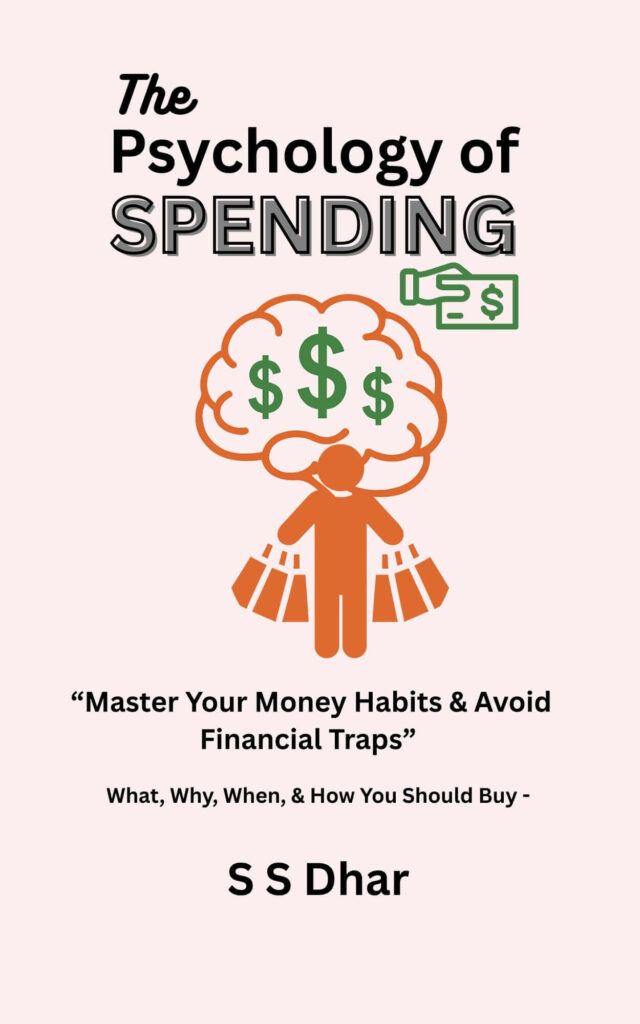
If this helped you map out your own plan, consider subscribing to my newsletter for more practical money management guides like this one. And if you want to understand why we struggle to save in the first place, my book, The Psychology of Spending: Master Your Money Habits and Avoid Financial Traps, digs into the everyday habits and mental shortcuts that quietly shape every financial decision we make.
Reviews (⭐⭐⭐⭐⭐)
The Psychology of Spending: Master Your Money Habits & Avoid Financial Traps
Learn how your spending habits shape your financial future with The Psychology of Spending by S S Dhar. This practical personal finance guide reveals the hidden emotional and psychological triggers behind impulse buying, overspending, and poor money decisions.
Inside this book, you will learn how to:
- Control impulse spending and emotional shopping
- Build smarter money and saving habits
- Understand marketing tricks and consumer psychology
- Practice delayed gratification for long-term success
- Make intentional financial decisions with confidence
Perfect for readers interested in personal finance, budgeting, money mindset, financial literacy, self-improvement, and wealth building.
“The key to financial well-being is not about how much you earn, but how you spend and save.”
Choose Your Country to Buy on Amazon