For years, I avoided budgeting apps and detailed spreadsheets entirely. Every system I tried demanded that I track every coffee, every gas fill-up, every small purchase, until budgeting felt less like a tool and more like a part-time job. What finally worked for me wasn’t a more complicated system. It was a far simpler one. That’s where the 50/30/20 budget rule comes in, and once I understood why it works, I stopped overthinking my budget entirely.
In this article
If you’ve ever opened a budgeting app, stared at fifteen spending categories, and closed it five minutes later out of sheer overwhelm, this guide is for you. I’ve recommended this exact framework to friends who swore they were “just bad with money,” and in almost every case, the real problem wasn’t their discipline, it was a budgeting system that was simply too complicated to maintain. The 50/30/20 rule fixes that by design.
What Is the 50/30/20 Budget Rule?
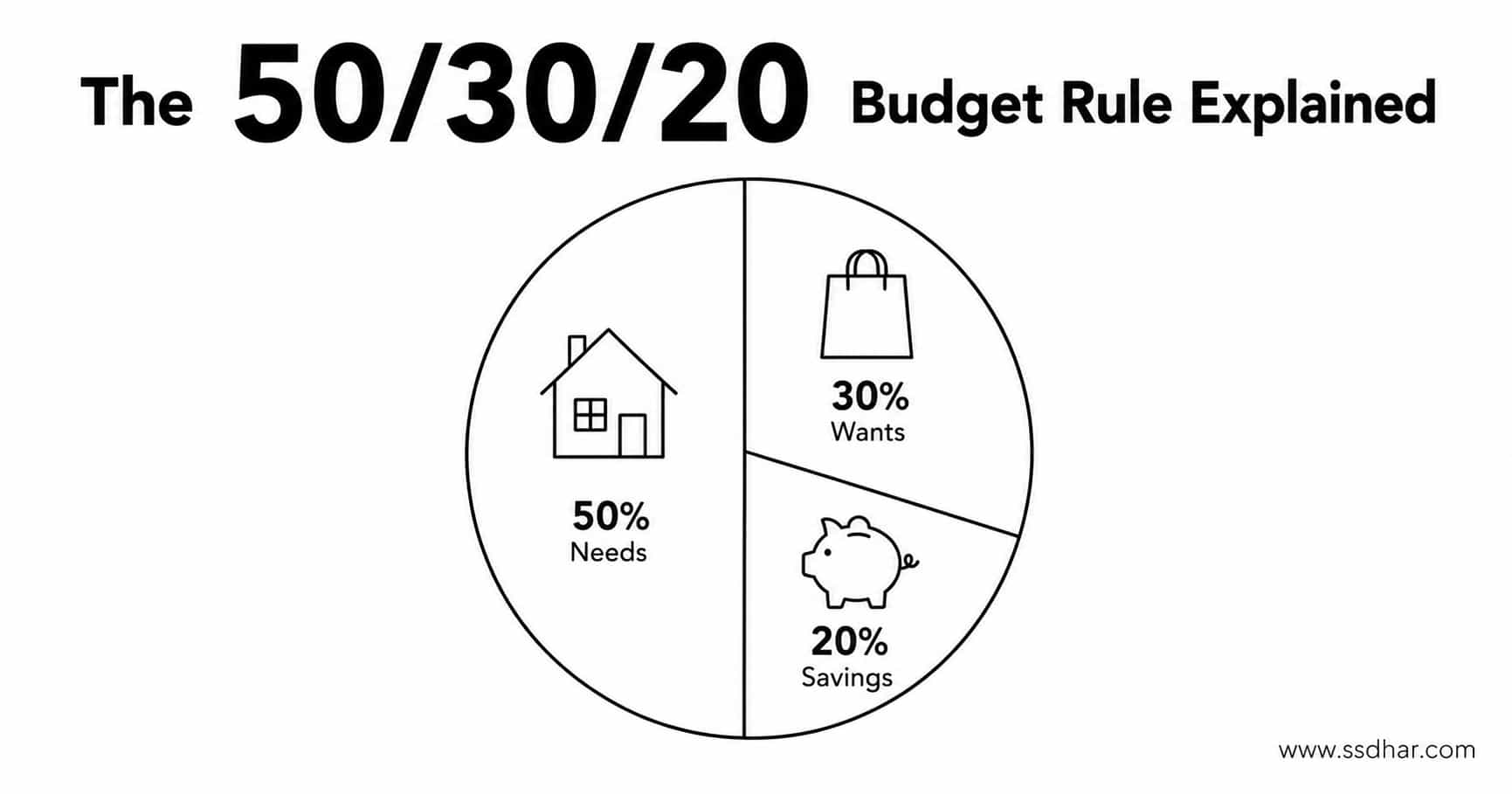
The 50/30/20 rule is a simple framework for dividing your after-tax income into three buckets:
- 50% for Needs — the non-negotiable bills you can’t avoid
- 30% for Wants — the flexible, enjoyable spending in your life
- 20% for Savings and Debt Payoff — the part that builds your future
This rule didn’t come from a random finance blog. It was popularized in 2005 by Senator Elizabeth Warren and her daughter, Amelia Warren Tyagi, in their book All Your Worth: The Ultimate Lifetime Money Plan. Drawing on roughly two decades of household financial research, the authors argued that most people don’t need a complicated budget at all, just a simple, repeatable way to balance their must-haves, their wants, and their future.
Breaking Down Each Category
Needs (50%)
This bucket covers expenses you genuinely can’t skip: rent or mortgage payments, utilities, groceries, insurance, minimum loan payments, and basic transportation. The key test is simple: if losing this expense would seriously disrupt your life, it belongs here.
Wants (30%)
This is your flexible spending category: dining out, streaming subscriptions, travel, hobbies, shopping, and entertainment. Wants aren’t a guilty category. They’re a built-in, planned part of the budget, which is exactly why this rule feels sustainable instead of restrictive.
Savings and Debt Payoff (20%)
This final slice covers your emergency fund, retirement contributions, investments, and any extra payments toward debt beyond the minimum. This is the category that quietly builds long-term financial security while the other two keep your daily life running.
A Real-World Example of the 50/30/20 Rule
Numbers make this far easier to picture. Let’s say your monthly after-tax income is $4,000.
| Category | Percentage | Monthly Amount | Examples |
|---|---|---|---|
| Needs | 50% | $2,000 | Rent, utilities, groceries, insurance |
| Wants | 30% | $1,200 | Dining out, streaming, hobbies, travel |
| Savings/Debt | 20% | $800 | Emergency fund, retirement, extra debt payments |
Once you see your income broken into three clean buckets like this, budgeting stops feeling abstract. You’re no longer guessing whether you’re “doing okay” with money, you have an actual benchmark to measure against.
Is the 50/30/20 Rule Still Realistic Today?
Here’s where I’ll be honest with you: this rule was designed nearly two decades ago, and the cost of living has shifted significantly since then. According to Moody’s Analytics data, incomes have risen by roughly 77% since 1999, while average rents have climbed by around 129% over the same period. In many cities across the US, UK, Canada, Australia, and India, rent alone can comfortably eat past the 50% mark before any other “needs” are even counted.
Some financial planners now suggest more flexible variations, like a 60/20/20 or even 60/30/10 split, depending on your local cost of living. The exact percentages matter far less than the underlying principle: separate your must-haves from your nice-to-haves, and protect a meaningful slice for your future self. If your needs run higher than 50% right now, that’s not a personal failure, it’s useful information telling you exactly where your budget is under pressure.
This holds true well beyond the US too. A renter in London, Toronto, Sydney, or Mumbai is dealing with their own version of the same squeeze, where housing costs have outpaced income growth in most major cities worldwide. The percentages might need adjusting for your zip code or postal code, but the underlying three-bucket logic still applies everywhere money changes hands.
The Psychology Behind Why This Rule Works
Most budgeting systems fail for one simple reason: they demand too many decisions. Every category you track is another decision your brain has to make, and decision fatigue is real. The genius of the 50/30/20 rule is that it collapses dozens of micro-decisions into just three. You’re not deciding category-by-category whether a purchase is “allowed.” You’re simply checking which of the three buckets it belongs in.
A budget isn’t a restriction, it’s a plan that tells every dollar where to go before you spend it.
That single mental shift, from “What am I allowed to buy?” to “Which bucket does this belong in?”, removes most of the friction that makes budgeting exhausting in the first place.
My Own Experience Applying a Percentage-Based Budget
When I first started managing money seriously, I tried tracking categories down to the dollar: $43 for groceries this week, $12 for coffee, $8 for parking. It was exhausting, and worse, I’d abandon the whole system within a month, every single time.
Switching to a percentage-based approach changed that completely. Instead of micromanaging every purchase, I just checked in periodically: was my “needs” bucket staying around half my income? Was my savings percentage holding steady? That bigger-picture view gave me far more consistency than granular tracking ever did, and consistency, not precision, is what actually builds wealth over time.
Common Mistakes People Make With the 50/30/20 Rule
- Misclassifying wants as needs. A premium streaming bundle is a want, no matter how essential it feels.
- Skipping the savings bucket when money feels tight, instead of trimming wants first.
- Treating the percentages as rigid law instead of a flexible starting framework.
- Forgetting debt payments belong in the savings/debt category, not lumped in as a “need.”
- Giving up entirely when the exact 50/30/20 split doesn’t fit a high-cost-of-living budget.
More Important Articles for You
Why Rich People Use 5 Bank Accounts to Manage Their Money Differently
How to Build an Emergency Fund From Scratch
How to Adjust the Rule to Fit Your Life
| Situation | Suggested Adjustment |
|---|---|
| High cost-of-living city | Try 60/20/20 or 65/15/20 |
| Aggressive debt payoff goal | Try 50/20/30, shifting wants toward debt |
| Strong, stable income | Try 50/20/30, boosting the savings bucket |
| Early career, lower income | Start at 60/30/10 and adjust as income grows |
The rule was never meant to be a rigid law carved in stone. Think of the 50/30/20 framework as scaffolding, something to build your habits around, not a cage to squeeze your life into.
How the 50/30/20 Rule Compares to Other Budgeting Methods
It helps to see this rule next to the other popular approaches, since people often ask whether the 50/30/20 system is genuinely “better” than alternatives like zero-based budgeting or the envelope method.
| Method | How It Works | Best For |
|---|---|---|
| 50/30/20 Rule | Splits income into three broad percentage buckets | People who want simplicity and flexibility |
| Zero-Based Budgeting | Every single dollar is assigned a specific job, leaving zero unassigned | Detail-oriented people who enjoy precise tracking |
| Envelope System | Cash is physically divided into spending envelopes by category | People prone to overspending who need a hard stop |
None of these methods is objectively superior. Zero-based budgeting offers more control but demands far more time and discipline to maintain. The envelope system creates strong spending boundaries but feels impractical for digital-first spenders. The 50/30/20 rule sits in a comfortable middle ground: structured enough to keep you accountable, simple enough that you’ll actually stick with it past the first month. For most beginners, that staying power matters more than any theoretical advantage another method might offer on paper.
In a Nutshell
The real value of the 50/30/20 rule isn’t the specific numbers; it’s the clarity it brings to a process that usually feels overwhelming. Once you know roughly how much should go toward needs, wants, and savings, every financial decision gets easier to evaluate. You stop wondering whether you’re “bad with money” and start simply checking your buckets. That shift, from guilt to clarity, is worth far more than perfect percentages.
Frequently Asked Questions
Who created the 50/30/20 budget rule?
The rule was popularized by Senator Elizabeth Warren and her daughter, Amelia Warren Tyagi, in their 2005 book All Your Worth: The Ultimate Lifetime Money Plan.
Is the 50/30/20 rule based on pre-tax or after-tax income?
It’s based on after-tax (take-home) income, not your gross salary before taxes and deductions.
What if my needs already take up more than 50% of my income?
This is common in high-cost cities. Try adjusting the ratio, such as 60/20/20, while you work on either increasing income or reducing fixed costs over time.
Does debt payoff count as a need or a saving in the 50/30/20 rule?
Minimum debt payments count as a need, while any extra payments beyond the minimum fall into the savings and debt category.
Can the 50/30/20 rule work with irregular income?
Yes, though it’s best applied to your average monthly income over several months, rather than any single unpredictable paycheck.
If this gave you a clearer way to think about your own budget, consider subscribing to my newsletter for more practical money management guides like this one. And if you want to dig deeper into the habits and mindset behind everyday spending decisions, my book, The Psychology of Spending: Master Your Money Habits and Avoid Financial Traps, explores exactly that.